Preparation
Yacht charter handover and return: a practical checklist
A calm, evidence-minded process for taking over and returning a charter yacht, from documents and safety systems to defect reporting and the final inspection.
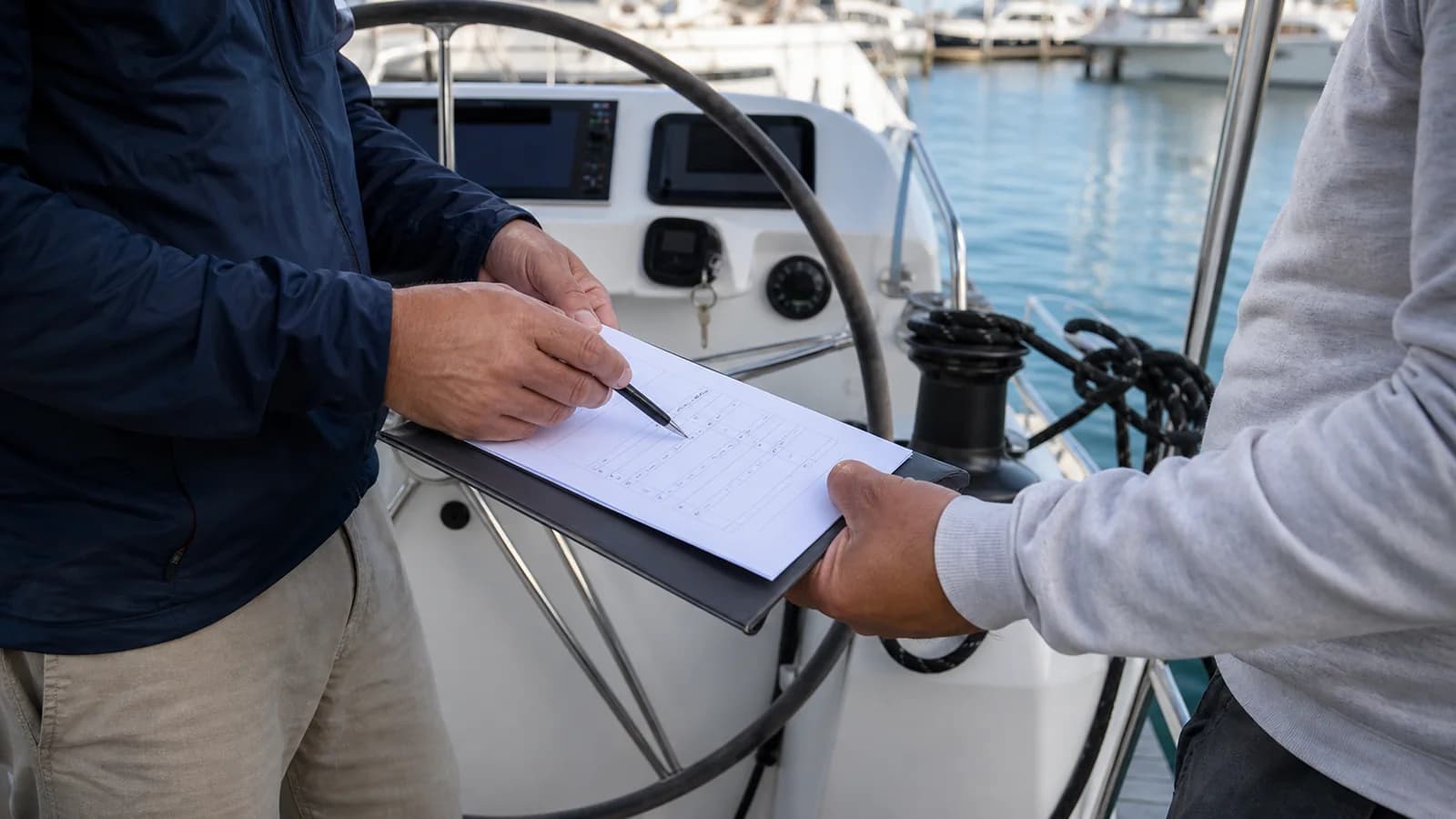
A handover is when the crew learns how this particular yacht works and the operator records its condition. At return, both sides compare the boat with that starting record, note what happened and close the charter without hurried guesswork. Clear questions, photographs and a written record protect operator and charterer while leaving fewer systems mysterious.
This guide is general preparation. The operator’s complete booking documents, contract, check-in form, navigation limits and instructions take priority over this guide, subject to applicable law.
Before arrival: make room for the handover
Read the arrival instructions before planning transfers or provisioning. Confirm:
- where and when check-in begins;
- which original identity, skipper and radio documents are required;
- who must be present to sign;
- whether a security deposit is a card hold, a captured payment or another arrangement;
- the final return time, refuelling rule and check-out window;
- a late-arrival process, if relevant;
- the operator’s normal and after-hours contact channels.
Do not schedule a long first passage around the earliest advertised check-in time. Cleaning, technical work, documentation or a late incoming yacht can change the actual departure. Choose a nearby first-night option and a safe alternative.
Create one shared folder for the contract, inventory, images, fuel receipt and messages. Nominate one crew member to take notes while the skipper follows the briefing.
If this is your first time in operational command, use the first bareboat checklist before deciding that a handover will fill every skills gap. It explains the boat; it is not a condensed sailing course.
Start with identity, scope and responsibility
Before looking inside lockers, make sure both sides are discussing the same yacht and charter.
Record the yacht name, operator identifier, booking reference and fuel policy. Ask the operator to explain:
- permitted cruising area and any prohibited zones;
- night-sailing, cross-border or weather restrictions;
- the process for authorising repairs or purchasing replacement items;
- which number to use for a technical fault, urgent safety problem or delayed return;
- what the crew must do after an incident, grounding, collision or loss;
- how the return inspection and damage record will be handled.
Save the signed contract and handover form. If an oral answer changes something material, ask for it in writing; conversations are difficult to reconstruct a week later.
Record condition before testing systems
Walk around the yacht systematically. Begin outside in one direction, then work through each interior space. Photograph wide views for context and close views for existing marks. A close-up of a scratch without showing where it is can be hard to interpret later.
Look for and record:
- hull, transom, rails, stanchions and rubbing strake damage;
- gelcoat chips, deck fittings, hatches, windows and cockpit furniture;
- propeller or saildrive observations that the operator is able to show;
- tender, outboard, paddles, pump, lock and fuel tank;
- sails, canvas, sheets, fenders, mooring lines and anchor gear;
- cabin doors, floors, worktops, upholstery and bathroom fittings;
- inventory items that are missing, damaged or materially different from the list.
Ask the operator to add discrepancies to the official handover record. Keep your own photographs, but do not assume photographs alone amend a signed form.
Make the safety briefing operational
The skipper and at least one other adult should be able to locate and use the key equipment. Do not merely accept “it is in that locker.” Open the locker and identify the item.
Cover, as applicable to the yacht and cruising area:
- lifejackets in suitable sizes, harnesses and attachment points;
- lifebuoy, recovery equipment and person-overboard controls;
- fire extinguishers, fire blanket, gas shut-off and escape routes;
- first-aid kit, distress signals and emergency contact information;
- fixed and handheld radio controls, including an operator demonstration of the distress function—never transmit a test distress alert;
- bilge alarms, electric and manual pumps and accessible seacocks;
- emergency tiller and the procedure for fitting it;
- engine stop, fuel shut-off and battery isolation;
- liferaft location and deployment information where one is carried.
Requirements vary by flag, area, boat and operation. A generic list does not prove compliance. Raise essential equipment that is absent, expired, inaccessible or unfamiliar before departure.
Test the systems you will depend on
Ask the base representative to demonstrate boat-specific procedures. Let the nominated skipper repeat unfamiliar operations while the representative is present.
Engines and manoeuvring
Start each engine as instructed. Observe gauges, alarms, cooling-water flow and charging. Test forward and reverse only under the representative’s direction with lines controlled. Check steering, neutral, fitted thrusters and authorised tools.
Record the fuel-gauge reading and whether the policy is “full to full” or something else. A gauge is not always a precise measurement, so ask what evidence the base uses at return.
Navigation and communication
Power up the plotter, depth, speed and wind instruments. Confirm the depth offset; never infer whether it is below keel, transducer or waterline. Test navigation lights and charging points. Check ordinary VHF operation only through an operator-approved radio check; never activate the distress function for a test. Identify the supplied charts covering the first route.
International voyage-planning guidance emphasises weather, hazards, suitable information and contingencies. For a charter crew, that begins with knowing which systems are aboard and what to do if a screen fails.
Ground tackle, sails and deck gear
Only with base permission, the operator’s direction and a safe berth setup, observe the representative demonstrate enough chain to explain the windlass, markings and manual release. Do not operate it unsupervised during handover. Ask how to secure the load off the windlass, and identify the anchor type, approximate chain length and snubber.
Review reefing, furling and sail controls without creating danger in the marina. If a full sail check cannot be performed at the berth, agree how and when a problem discovered after departure should be reported. Locate winch handles, boat hook, fenders and adequate lines.
Domestic and electrical systems
Check shore power, battery monitor, fridge, water pump, toilets, drains and gas. Ask which appliances need shore power or generator, which batteries serve them and which warning matters. Tank gauges can be approximate.
Brief the crew before casting off
Give the crew a short briefing on safe movement, toilets, water and reporting smells, leaks, alarms or vibration. Another adult should know how to stop the engines, make a radio call and give the yacht’s position.
Assign line roles before the first manoeuvre. Agree that nobody jumps ashore or uses a limb as a fender. Show where loose gear is stowed. Then make the first leg modest enough to learn the boat in daylight.
During the charter: report facts early
If something stops working, protect people and the yacht first. Use emergency services when the situation requires them; the operator’s support line is not a substitute for rescue coordination.
For a non-emergency defect:
- note the time, position, conditions and symptoms;
- take useful photographs or a short video without delaying safe action;
- contact the operator through the instructed channel;
- follow only procedures the skipper can perform safely;
- obtain approval before arranging external work or buying a replacement, unless the contract explicitly says otherwise;
- retain messages and receipts.
Describe observations rather than diagnosing confidently: “the starboard engine alarm sounded and cooling water was not visible” is more useful than “the impeller is broken” unless it has actually been established.
Do not postpone a material report until check-out because the boat still moves. Early notice can prevent secondary damage and gives the operator a chance to advise.
Plan the return before the final morning
Reread the return instructions one or two days beforehand. Allow for weather, fuel, waste and inspection. The contract may require return before the formal check-out date.
Complete the operator’s requested tasks, which may include:
- returning with the agreed fuel level and retaining the receipt;
- securing and inventorying the tender and outboard;
- disposing of rubbish in permitted facilities;
- handling holding tanks according to base instructions and local rules;
- replacing moved equipment in its normal location;
- reporting losses, breakages, groundings or system faults;
- removing all personal belongings.
Never conceal a problem or attempt a cosmetic repair. A clear account is safer and easier to assess than a surprise discovered by the next crew.
Conduct a two-sided return inspection
Where possible, walk around with an authorised representative. Use the original form and photographs. Record fuel indication, hull and deck condition, inventory and reported defects. Ask both sides to sign or acknowledge the check-out record and keep a copy.
If lifting, diving or a later technical inspection is required, ask what remains open, who will inspect it and how the result will be documented. Do not describe the deposit as “released” until the party holding it confirms the action; a bank may still need processing time before available credit changes.
If a deduction is proposed, stay factual. Ask for the contract clause, condition report, photographs and an itemised basis. The amount and process depend on the signed agreement; a card hold, operator waiver and separate insurance are not interchangeable. Include the actual arrangement when using our complete charter-cost guide.
Illustrative example: a disputed stern mark
Illustrative only: during check-out, a base representative points to a mark on the stern. The crew does not remember an impact. Instead of arguing from memory, both sides compare the time-stamped arrival overview and close-up photographs with the return images. They add the observation to the form and identify which inspection remains pending.
This record does not decide legal responsibility. It gives the operator, charterer, insurer or card issuer better evidence than “it was already there” versus “it was not.”
The compact handover-and-return checklist
Before departure, can you answer yes to these questions?
- Are yacht identity, existing damage and inventory recorded?
- Are skipper documents, cruising limits and support contacts confirmed?
- Can two adults locate critical safety equipment and stop the engines?
- Have steering, engines, navigation, radio, anchor and essential domestic systems been demonstrated?
- Are fuel level, deposit method and return conditions written down?
- Is the first leg conservative, with weather and an alternative considered?
At return:
- Did you follow the stated time, fuel, waste and equipment rules?
- Did you disclose and document incidents or defects?
- Did both sides compare against the starting record?
- Did you retain the return form, fuel receipt, messages and relevant images?
- Is any open inspection or proposed deduction described in writing?
A handover done this way is not bureaucracy for its own sake. It is a practical transfer of knowledge and a shared baseline for the week.
Sources and further reading
- UK Maritime and Coastguard Agency: SOLAS Chapter V navigation guidance
- International Maritime Organization: Guidelines for voyage planning
- Royal Yachting Association: safety practice guidance
- Navigare Yachting: operator terms as one current contractual example
Ready to apply the checklist? Search yachts with dates and destination, or contact Charterwerk support before booking to ask where unclear operator wording is recorded. The operator’s written contract remains authoritative, and no support outcome is promised.
Continue your planning
Reviewed guides for the practical questions that usually come next.
Preparation
First bareboat charter checklist: skills, documents and safety
A sober readiness check for first-time bareboat skippers, covering operator approval, crew briefing, arrival inspection, route planning and the decision to hire a skipper.
Families
A yacht charter with children: a practical family decision guide
Plan a family yacht charter around supervision, correctly fitted safety equipment, boat layout, weather margin and routines that children can actually sustain.
Booking clarity
Yacht charter security deposits and damage waivers explained
Understand card holds, paid deposits, damage waivers and separate deposit insurance before a yacht charter—without assuming that the product name defines the cover.
Turn the guide into a shortlist
Compare current yachts first, then ask us to clarify operator wording before you commit.