Preparation
First bareboat charter checklist: skills, documents and safety
A sober readiness check for first-time bareboat skippers, covering operator approval, crew briefing, arrival inspection, route planning and the decision to hire a skipper.
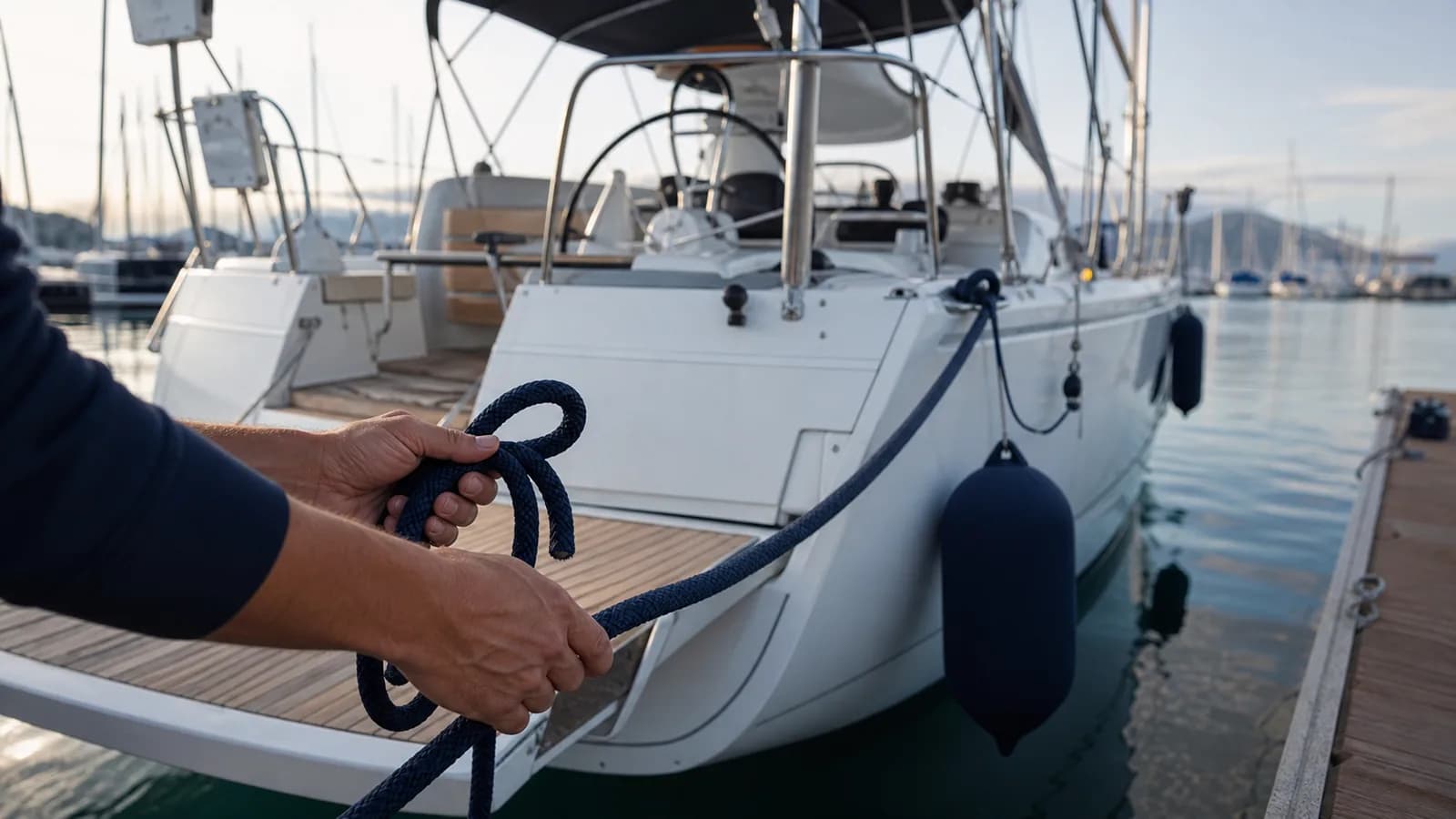
Bareboat means that your group accepts the operational responsibility normally carried by professional crew. A certificate may be required, but the document alone does not prove that a skipper is ready for a particular boat, base and weather pattern. The professional operator decides whether the submitted qualifications and experience meet its rules and insurance requirements.
Use this checklist before booking, again during the week before departure and once more at handover. If an item reveals a gap, the useful response is to reduce the plan, arrange instruction or hire a professional skipper.
Before booking: establish whether bareboat is realistic
Prepare a short sailing résumé for the proposed skipper. Include:
- licence and radio certificate, with issuing country and expiry where applicable;
- recent days as skipper rather than total days aboard;
- largest comparable length and type handled;
- experience with twin engines if choosing a catamaran;
- experience with stern-to mooring, anchoring and restricted marinas;
- relevant tidal, night or heavy-weather experience;
- the intended cruising area.
Send it to the operator and obtain written acceptance. Check the destination authority’s current list of recognised certificates as well; operator approval does not override local law.
Be candid about the crew. A skipper who can manage a boat with three experienced sailors may not be equally comfortable when supervising young children and four first-time guests. Identify a second adult who can steer, stop the engine, use the radio and assist in a person-overboard situation.
Documents to assemble
Keep a secure digital copy and, where required, the originals:
- passports or accepted identity documents for every crew member;
- accepted skipper and radio certificates;
- charter contract and operator confirmation;
- crew list and emergency contacts;
- travel and medical insurance details;
- payment receipts and the remaining payment schedule;
- security-deposit or deposit-insurance documents;
- base address, arrival instructions and after-hours number.
Names should match the identity documents. Tell the operator about late arrival rather than assuming a handover will remain available. If a crew change is possible, ask what notice and documentation the base requires.
Skills to practise before the trip
Do not make the charter handover the first time you attempt core manoeuvres. Practise on a reasonably comparable boat where possible.
Close-quarters handling
The skipper and assisting crew should understand prop walk, steerage at low speed, crosswind effects, stopping distance, spring lines and how the selected boat responds in reverse. Agree on simple hand signals. Nobody should jump ashore or place a limb between boat and quay.
Anchoring
Be able to choose a suitable patch using chart and local information, calculate appropriate scope, set the anchor, verify the hold and monitor swing. Know how to recover if the anchor drags or fouls. The presence of other boats is not proof that your position is safe.
Sail reduction and engine contingencies
Rehearse reefing early, starting and stopping the engine, checking cooling-water flow and responding to a line near the propeller. Know the boat-specific procedure before leaving the base; improvisation in rising wind is expensive.
Person overboard and radio
Brief a simple recovery plan and practise the roles. Every adult should know where the distress button is, how to give position and nature of distress, and when to use emergency services. A mobile phone is useful but not a substitute for the installed marine radio and local procedures.
Build a conservative first route
Plan around the least experienced crew member, not the most ambitious waypoint. Your first afternoon is for learning the boat. Keep it short enough to reach a suitable berth or anchorage in daylight with margin.
For each day, note:
- expected distance and an intentionally conservative speed;
- forecast source and local warning times;
- one primary stop and at least one safe alternative;
- marina booking or anchoring limitations;
- fuel, water and battery needs;
- a latest sensible departure and decision point;
- hazards that are difficult to see at night.
Check the operator’s navigation limits. Some contracts prohibit night sailing, offshore passages or entry into specified areas. Those limits are part of your plan, even if your licence would otherwise allow the trip.
Make the crew briefing useful
Keep the first briefing short enough to remember, then revisit topics before each relevant task.
Show everyone:
- correctly fitted lifejackets and when they must be worn;
- fire extinguishers, gas shut-off and escape routes;
- first-aid kit, emergency tiller and bilge controls;
- safe movement, handholds and footwear;
- toilet and water-system rules;
- how to stop the engine and call for help;
- the rule that the skipper can shorten or cancel a passage.
Assign lines by name before entering a marina. Explain the manoeuvre, the abort plan and the instruction to keep hands and feet clear. Shouting more loudly is not a substitute for an agreed plan.
Inspect the yacht at handover
Allow time and resist pressure to rush. Photograph existing damage with timestamps and ensure it appears on the handover record. Test or locate:
- engine start, gauges, alarms and fuel indication;
- steering, bow thruster if fitted and emergency tiller;
- navigation lights, instruments, radio and charging;
- anchor windlass, manual release, chain markings and snubber;
- sails, reefing system, winches and essential deck gear;
- bilge pumps, seacocks, gas shut-off and fire equipment;
- lifejackets, harnesses, flares and first-aid kit;
- tender, outboard, fuel and security equipment;
- water, toilets, fridge, batteries and shore-power lead.
Ask the base to demonstrate any unfamiliar system. Record the technical-support number and what the operator expects you to do before authorising a repair.
Provision for the actual boat
Storage, fridge volume and electrical capacity are finite. Start with drinking water, easy first-night food and supplies for a delayed shop. Ask about potable tank water rather than assuming it is suitable for everyone. Avoid overloading the galley with packaging and plan how waste is stored until it can be disposed of legally.
Include sun protection, warm layers, non-slip shoes, personal medication and soft bags that can be stowed. A hard suitcase is memorable for the wrong reason in a compact cabin.
Know when to hire a skipper
Choose professional help if the operator hesitates over the résumé, the boat is materially larger or different from recent experience, the crew cannot assist, or the planned waters add unfamiliar complexity. A skipper can also be hired for the first days, subject to operator availability and rules.
Confirm their sleeping place, meals, fee, travel costs, working arrangement and whether their presence changes guest capacity. The decision is not a failure; it can turn a stressful assessment into a useful learning holiday.
FAQ
Does a licence guarantee the operator will accept me?
No. The operator considers its insurer, the yacht and recent relevant experience, while the destination’s law determines which certificates are recognised. Obtain both answers before relying on a bareboat plan.
What should I do if the forecast exceeds my comfort level?
Stay in a safe place, reduce the route or ask the base for local guidance. A prepaid berth or itinerary is never a reason to sail beyond the skipper’s safe judgement.
Can the handover replace practical training?
No. Handover explains the specific boat and records its condition. It is not designed to teach core boat handling, navigation, radio use or emergency skills from the beginning.
Continue your planning
Reviewed guides for the practical questions that usually come next.
Preparation
Yacht charter handover and return: a practical checklist
A calm, evidence-minded process for taking over and returning a charter yacht, from documents and safety systems to defect reporting and the final inspection.
Families
A yacht charter with children: a practical family decision guide
Plan a family yacht charter around supervision, correctly fitted safety equipment, boat layout, weather margin and routines that children can actually sustain.
Booking clarity
Yacht charter security deposits and damage waivers explained
Understand card holds, paid deposits, damage waivers and separate deposit insurance before a yacht charter—without assuming that the product name defines the cover.
Turn the guide into a shortlist
Compare current yachts first, then ask us to clarify operator wording before you commit.