Families
A yacht charter with children: a practical family decision guide
Plan a family yacht charter around supervision, correctly fitted safety equipment, boat layout, weather margin and routines that children can actually sustain.
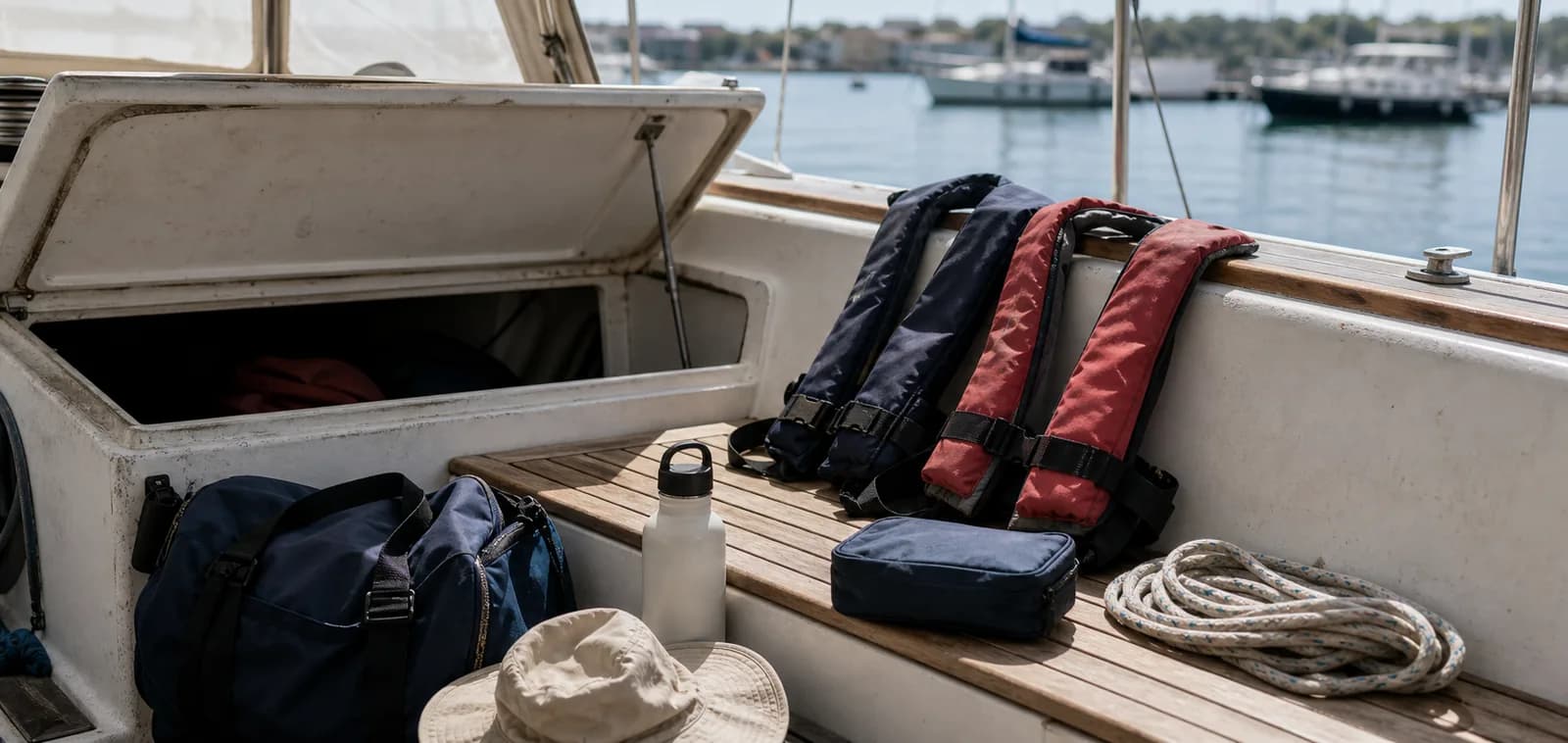
Children may remember breakfast outside, a new bay and helping with a line. Adults may remember hatches, hot decks, moving booms and constant headcounts. Both versions can be true.
A family charter is not an adult itinerary with smaller passengers. Boat, route, roles and rhythm must still work when a child is tired, seasick, excited or uncooperative. No listing badge can decide that for a family.
Begin with a family readiness conversation
Before searching for a yacht, describe the children as precisely as you would describe the skipper’s experience:
- age, weight and swimming ability;
- comfort wearing an appropriate lifejacket for long periods;
- ability to follow one-step safety instructions;
- tendency to climb, wander or act impulsively;
- seasickness history and relevant health or sensory needs;
- sleep routine and whether an adult must share a cabin;
- experience with tenders, docks and natural open water;
- the number of adults able to supervise rather than merely be aboard.
Swimming confidence does not replace close supervision or a correctly fitted flotation device. The World Health Organization identifies young children as particularly vulnerable and notes that risk rises without active adult supervision. The WHO drowning fact sheet also treats swimming and water-safety education as one layer in broader prevention, not a guarantee.
Decide what would make the holiday a no-go or a different trip. Examples might include no suitable child lifejacket, only one capable adult, a child who will not tolerate wearing required equipment, or a proposed route with no conservative alternative. This is not pessimism; it is choosing before money and expectations make the decision harder.
Choose the boat by movement, not brochure space
Large saloons and wide cockpits are attractive, but inspect the path a child will actually use from cabin to cockpit and from cockpit to bathing platform.
Ask for recent, boat-specific photographs or a video showing:
- companionway angle and handholds;
- gaps in guardrails and gates;
- cockpit enclosure and access to winches or helm controls;
- hatches that open into walking areas;
- height and security of berth lee cloths or barriers, if any;
- access to the sea, tender and quay;
- non-slip surfaces and sharp corners;
- whether doors can be secured without trapping anyone;
- location of galley flame, hot surfaces and battery controls.
A catamaran may provide level living space and less heel, but has a wide beam, two hulls, large forward areas and different motion. A monohull may communicate wind through heel and fit more berths, but companionways and side decks can be demanding. Neither type is automatically safer for children. Compare the actual layout and the crew’s handling competence with the intended conditions.
Use the guide to choosing the right boat as a starting worksheet, then filter current yacht availability by the group’s real constraints rather than maximising cabin count.
Confirm child equipment in writing
“Safety equipment included” is not enough. Ask the operator for the number, approval standard, wearer weight or chest ranges, type and service status of the lifejackets intended for each child. Give current measurements; do not request equipment only by age.
Adult lifejackets may not work for children. The US Coast Guard fit guidance explains that a foam device should fit snugly and not rise above the wearer’s chin or ears. This is useful fitting logic, but approval labels and legal rules differ by country. Confirm requirements with the competent authority for the boat and cruising area.
At handover, inspect and fit each device before departure. Follow its label and manufacturer instructions. Check fastenings, straps, damage, inflation status where relevant and whether the child can move and breathe comfortably. Ask the base to demonstrate unfamiliar equipment. A pool toy, arm band or swim vest must not be treated as a certified lifejacket unless its actual approval and intended use say so.
Do not assume the operator supplies cot rails, netting, harnesses, tethers, child cutlery or an appropriate car seat for transfers. Obtain written confirmation of exact items, dimensions, installation responsibility and any restrictions. Do not improvise a restraint or netting system; ask a qualified professional what is appropriate for the child and yacht, and obtain the operator’s approval before installation.
Write the supervision plan before departure
“Everyone is watching” often means no one has the task. Assign a named adult whenever children can access water, deck, dock or tender. That adult is not simultaneously navigating, docking, cooking, sleeping, drinking alcohol or concentrating on a phone.
Create three operating modes:
In harbour
Specify whether children may leave the cockpit, who escorts them on the pontoon and where keys or pass cards are kept. A quiet marina is still open water with lines, electrical cables and moving boats.
Underway
Define where each child sits, when lifejackets are worn, which areas are off-limits and who takes over supervision during sail changes or manoeuvres. The skipper must be free to command the boat. If the same adult is the only effective child supervisor and essential deck crew, the crew plan has a gap.
Swimming and tender use
Set entry and exit points, headcount, engine-off rules and a clear boundary. Assign an adult at the water rather than watching from inside. Check depth, current, traffic, local restrictions and the child’s actual ability that day. Swim lessons do not remove the need for close, constant supervision; CDC water-safety guidance explicitly maintains supervision even when a child has lessons or a lifeguard is present.
A hired skipper’s duties come from the written arrangement. Do not assume they include childcare or lifeguarding, and do not assume the operator’s base staff supervise the family. Confirm roles rather than letting courtesy become an unsafe assumption.
Make the first route intentionally modest
For a family’s first charter, a short first leg and an easy return are features, not missed opportunities. Plan around the child with the lowest tolerance, the least experienced adult and the forecast—not the longest range of the yacht.
A useful daily plan includes:
- one primary stop and at least one protected alternative;
- the official marine forecast and a specific recheck time;
- an early decision point for shortening the day;
- daylight arrival with time for food and settling;
- no critical final-day passage;
- a rest day or two-night stop;
- access to shore, shade, provisions and medical help appropriate to the family.
Weather can change quickly and warnings have specific local meanings. Use the official service for the cruising area, current charts, notices and base advice. A general weather app does not replace a marine forecast. If conditions exceed the skipper’s, crew’s or child’s safe margin, remain in a safe place or revise the route.
Design routines for heat, sleep and motion
Life aboard becomes harder when basic needs are left until a child complains. Establish regular water, food, shade and toilet checks. Keep hats and protective clothing accessible rather than under a berth. The NHS sun-safety guidance recommends extra care for children, shade, protective clothing and appropriate, regularly reapplied sunscreen; obtain individual medical guidance where needed.
Ask a clinician or pharmacist before travel about a child’s existing conditions, prescriptions and any seasickness product. Follow the product label and individual professional advice, store medication as instructed, and identify where appropriate care can be reached.
Choose berths for safe access and ventilation, not adult status. Confirm how upper berths are protected and whether a child can operate the cabin door. Keep escape routes clear. At night, agree who responds if a child wakes and how that adult moves safely without waking the entire crew.
Use handover as a family rehearsal
Complete the technical inspection from the first bareboat checklist, then run a child-specific rehearsal before leaving:
- Fit every lifejacket and show the adult how it fastens.
- Walk the permitted route between cabin and cockpit.
- Identify no-go areas and the safe seated place during manoeuvres.
- Show all adults engine stop, radio, first aid, fire equipment and recovery gear.
- Practise a calm headcount and adult handover of supervision.
- Check gates, hatches, cooker controls and tender access.
- Ask how to contact the base and local emergency services.
If supplied equipment is missing, damaged or the wrong size, record it and resolve it with the operator before departure. Do not reinterpret a listing or platform description as proof that the item is aboard.
Illustrative scenario: a seven-year-old’s first afternoon
This scenario is illustrative, not a claim that a route or boat is suitable. Handover finishes later than expected, and the afternoon breeze is stronger than the family’s planned threshold. The skipper and second adult decide to remain in the base instead of forcing the first leg.
One adult supervises while the other completes checks. The child fits the confirmed lifejacket, learns the permitted cabin-to-cockpit route and chooses a berth. The family eats an easy meal, checks the official morning forecast and selects a nearby destination plus a return-to-base alternative. The “lost” evening buys a rested crew and reveals a stiff gate before it matters at sea. Another family, boat or forecast might require a different decision.
Family go/no-go card
Before each departure, every answer should be explicit:
- Is the skipper satisfied with forecast, boat and route?
- Is the supervising adult named for this leg?
- Are correctly fitted child lifejackets ready and worn as required?
- Are children rested, fed, hydrated and comfortable enough to travel?
- Is there a protected alternative reachable with margin?
- Can the crew arrive in daylight without rushing?
- Is any adult relying on alcohol, medication or multitasking that impairs the assigned role?
- Does the least confident person aboard agree with leaving?
“No” does not need a dramatic justification. Waiting, shortening or staying ashore can be the successful version of the day.
What Charterwerk can and cannot confirm
The listing and booking record are starting points, not physical inspections. Use Charterwerk’s available contact route to ask a precise pre-booking question; the professional operator remains the party able to confirm the exact equipment assigned to the exact yacht. Charterwerk cannot remotely assess a child, guarantee fit or presence, replace the product label or local rules, decide the skipper’s safety judgement or provide childcare.
Send precise, answerable questions: child weight and chest range, requested equipment type, exact yacht, dates and base. Keep the written reply with the booking record. If the answer changes the suitability of the holiday, contact the Charterwerk team before payment rather than hoping to solve it at handover.
Continue your planning
Reviewed guides for the practical questions that usually come next.
Booking clarity
Yacht charter security deposits and damage waivers explained
Understand card holds, paid deposits, damage waivers and separate deposit insurance before a yacht charter—without assuming that the product name defines the cover.
Booking
Yacht charter cancellations, changes and insurance: a decision guide
Understand which contract controls a cancellation or change, what travel insurance may assess, and which evidence to collect before making an expensive decision.
Preparation
Yacht charter handover and return: a practical checklist
A calm, evidence-minded process for taking over and returning a charter yacht, from documents and safety systems to defect reporting and the final inspection.
Turn the guide into a shortlist
Compare current yachts first, then ask us to clarify operator wording before you commit.