Choosing a yacht
How to choose the right charter yacht for your crew
A practical comparison of monohulls, catamarans and motor yachts based on crew needs, experience, route, real usable space and total trip cost.
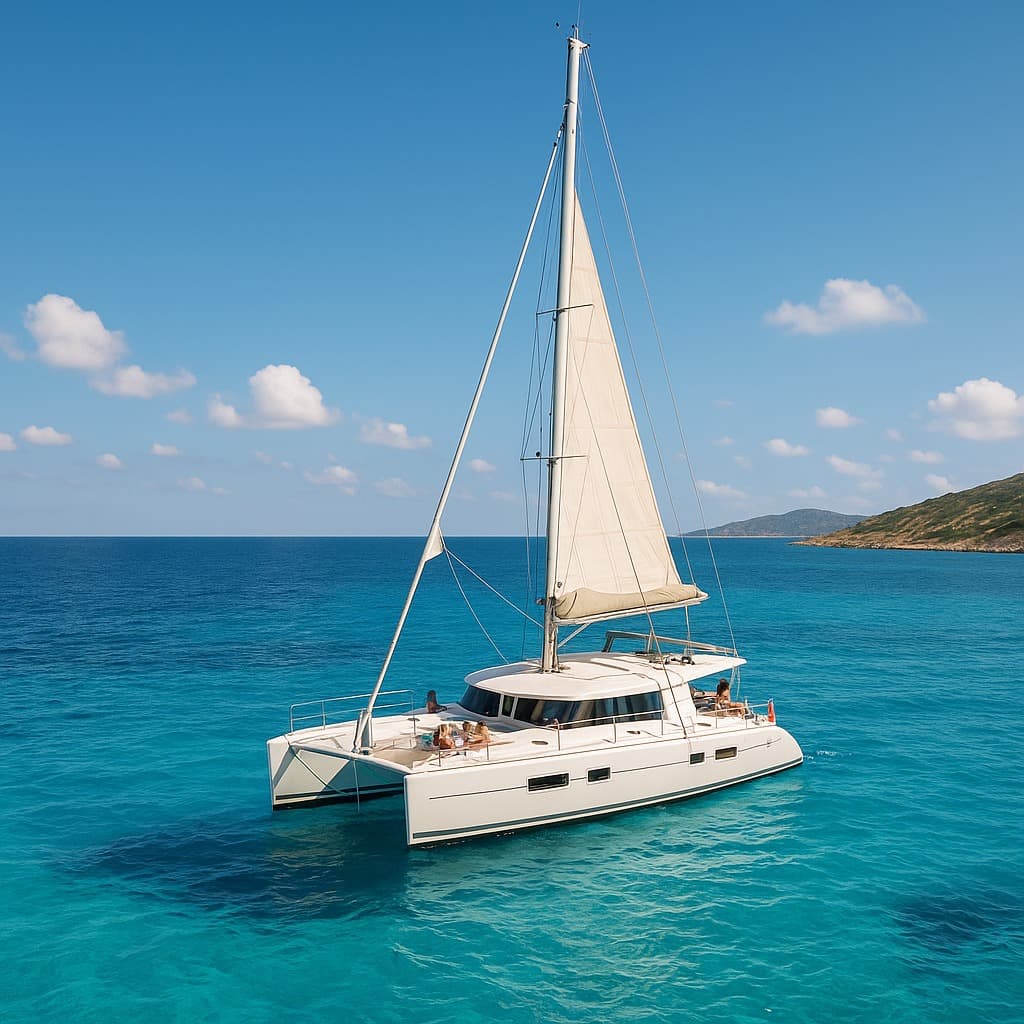
A useful yacht search does not begin with a model name. It begins with the people who will live together for a week, the waters you intend to cover and the jobs someone must be comfortable doing. A bigger or newer boat can still be the wrong choice if the cockpit is awkward for your group, the marina cannot take its beam or the skipper has never handled twin engines.
This guide gives you a repeatable way to narrow the choice before the attractive photographs take over.
Start with the crew, not the brochure
Write down who is coming and what would make the week difficult for each person. Be specific.
- How many adults and children will sleep aboard?
- Which couples need a double cabin, and who is genuinely comfortable in bunks?
- Does anyone have limited mobility, seasickness concerns or a need for shade?
- Who wants active sailing, and who primarily wants a stable holiday base?
- Can the group share compact bathrooms and storage without friction?
- Is there one qualified skipper, several experienced crew members or no sailing experience at all?
The advertised berth count is an upper limit, not a comfort rating. A saloon conversion may technically sleep two people while removing the shared living space every evening. Crew cabins can be suitable for a paid skipper but not comparable to guest cabins. Ask for the actual layout and decide who sleeps where before booking.
Compare the three common choices
Sailing monohull
A monohull is usually the clearest choice for a crew that values the feeling of sailing and is happy with a more compact interior. It occupies a normal-width berth, can be easier to place in busy marinas and often has a lower base price than a catamaran of similar sleeping capacity.
The trade-off is heel under sail, stairs between cockpit and saloon, and less separation between cabins. A large monohull is not automatically easier: loads rise, the turning circle changes and bow-thruster availability should never replace sound close-quarters handling.
Choose it when the skipper is comfortable with the size, most of the crew wants to sail and the route includes marinas where a wide berth is scarce.
Sailing catamaran
A catamaran offers level living, a broad cockpit, separation between hulls and a saloon close to the outdoor space. Families and mixed-experience groups often value that layout. At anchor, the shallow draft can open useful options, subject to the chart, local rules and the skipper’s judgement.
The width affects almost everything: berth availability, marina price, turning room and windage. Twin engines make manoeuvring intuitive after proper practice, but a high-sided catamaran can move quickly in a crosswind. Do not assume “more stable” means immune to uncomfortable motion or poor-weather risk.
Choose it when shared space and privacy matter more than sailing sensation, the route supports its beam and the budget includes wider berths.
Motor yacht
A motor yacht trades sail handling for speed and can make longer distances possible within a short holiday. The right model may offer generous accommodation and easier movement for guests who do not want to manage sails.
Fuel is a meaningful variable rather than a minor extra. Consumption depends on hull, engine, speed, sea state and route, so a generic daily figure is not reliable. Ask the operator for the model’s realistic consumption range at displacement and cruising speeds, then build several route scenarios. Confirm whether a professional skipper or additional crew is mandatory.
Choose it when travel time and onboard service matter most and the crew accepts the fuel, staffing and marina implications.
Use five filters that photographs cannot answer
1. Handling experience
Send the operator an honest summary of the skipper’s licence and recent experience, including the largest comparable boat handled, sailing area and stern-to or Mediterranean mooring practice. The operator decides whether the submitted experience satisfies its insurer and local requirements. That decision can differ between two apparently similar yachts.
If there is doubt, price a professional skipper from the start. A skipper needs a suitable berth and meals, and may affect the maximum guest count.
2. Real trip cost
Compare the total expected trip rather than the headline rental. Build one worksheet with:
- base charter price;
- mandatory cleaning, transit log or service package;
- requested equipment and onboard services;
- security-deposit or deposit-insurance arrangement;
- skipper, hostess or crew costs;
- likely berths, buoys, tourist charges and park fees;
- fuel, water, shore power and provisioning;
- transport to the base.
Some items are payable online, others to the operator or at the base. The offer and checkout should identify the recipient and due date. Treat an unknown item as a question, not as zero.
3. Route and berth constraints
A seven-night booking rarely means seven full sailing days. Check-in can be late on the first day and return may be required on the final evening. Plot a conservative route using the usable window, expected conditions and safe alternatives.
Then check whether your likely marinas accept the boat’s length, beam, draft and shore-power needs. A dream yacht that forces an unsuitable itinerary is not the right yacht.
4. Onboard systems
Air conditioning, generator, watermaker, electric toilets, inverter and Wi-Fi are not simple yes-or-no comforts. Ask when each system can run, what shore connection it needs, whether use is included and what happens if a unit is unavailable. “Air conditioning” may mean shore-power operation only or limited generator hours.
For early or late-season trips, ask about heating, cockpit enclosure and bedding rather than relying on a summer equipment list.
5. Condition and operator support
Year of build is only one signal. Refit history, maintenance, sail age, engine servicing and how the base handles faults can matter more. Ask whether listing photographs show the exact yacht, which material changes have occurred and whom you call outside office hours.
A short decision exercise
Give every adult three private votes:
- one non-negotiable;
- one feature worth paying more for;
- one compromise they can accept.
Combine the answers, then compare no more than three boats against the same worksheet. This prevents the search from expanding endlessly and makes disagreements visible before money is involved.
Before paying, ask the operator or booking specialist to confirm the exact layout, mandatory charges, payment schedule, cancellation terms, skipper acceptance and confirmation process in writing.
FAQ
Is a catamaran always better for a first charter?
No. Its living layout can be welcoming, but its beam, windage and marina requirements create different handling and cost considerations. The right first boat is one the accepted skipper can manage and the crew can afford across the whole trip.
How many cabins should we book?
Assign every person a berth on the actual layout. Preserve the saloon as shared space where possible and count any skipper or crew berth before assuming the advertised maximum is comfortable.
Should we choose the newest available yacht?
Not automatically. Compare maintenance and refit information, equipment, operator support and layout. A well-maintained older yacht can suit the crew better than a newer but poorly configured one.
Continue your planning
Reviewed guides for the practical questions that usually come next.
Families
A yacht charter with children: a practical family decision guide
Plan a family yacht charter around supervision, correctly fitted safety equipment, boat layout, weather margin and routines that children can actually sustain.
Booking clarity
Yacht charter security deposits and damage waivers explained
Understand card holds, paid deposits, damage waivers and separate deposit insurance before a yacht charter—without assuming that the product name defines the cover.
Booking
Yacht charter cancellations, changes and insurance: a decision guide
Understand which contract controls a cancellation or change, what travel insurance may assess, and which evidence to collect before making an expensive decision.
Turn the guide into a shortlist
Compare current yachts first, then ask us to clarify operator wording before you commit.