Destinations
Sailing in Greece: choose the right region and a realistic route
Compare the Ionian, Saronic Gulf and Cyclades, then plan a Greek yacht charter around weather, crew confidence, ports and protected waters.
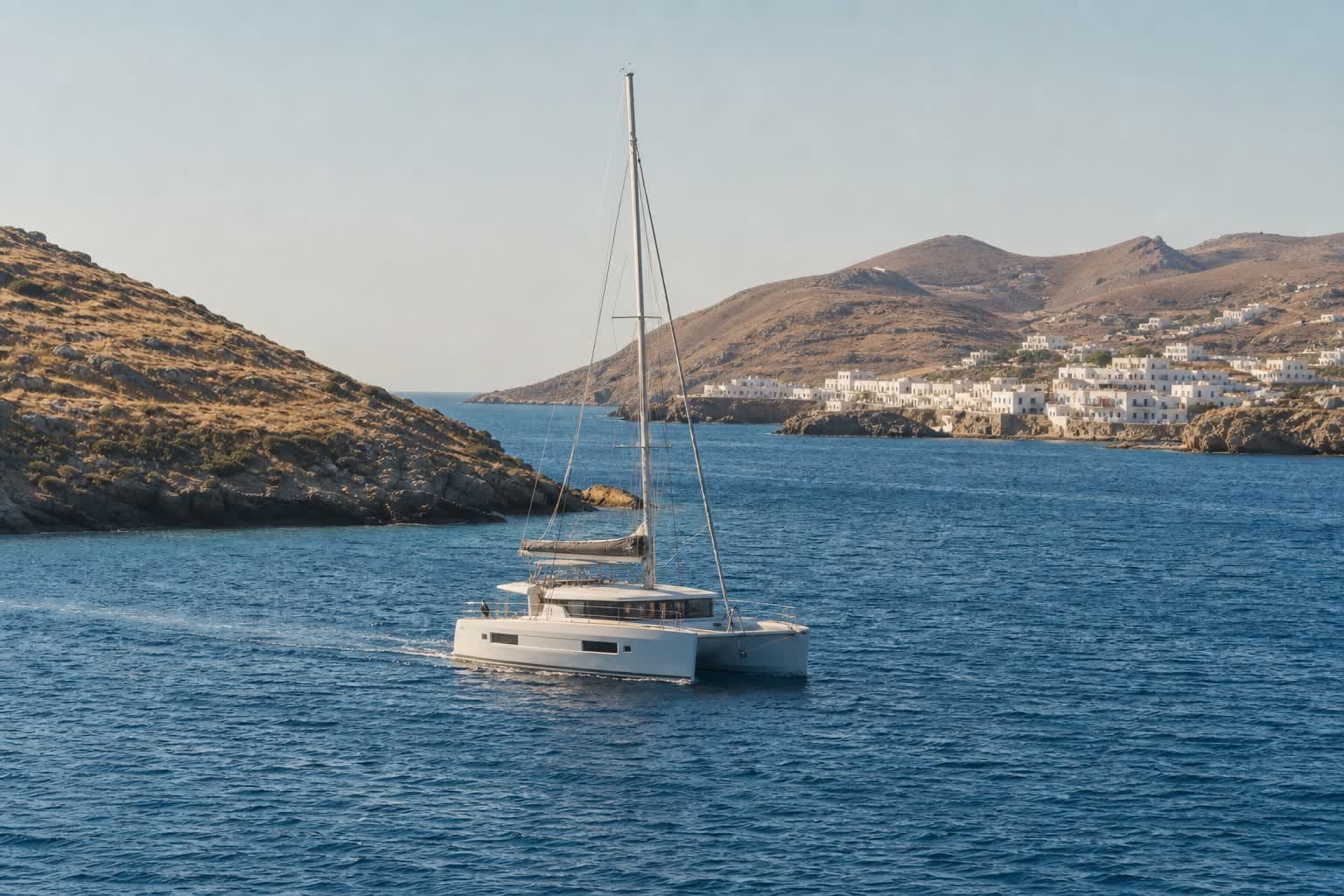
Greece rewards crews who choose one sea rather than trying to collect islands. A week in the Ionian can be gentle and sociable; a week from Lavrio can feel much more exposed even when the pins on the map appear close together. Neither is automatically “better”. The useful question is how much sailing, uncertainty and close-quarters work your crew genuinely wants between swims and dinners ashore.
This guide is designed to help you make that choice without pretending that a saved route can overrule the weather. It does not replace current charts, pilot books, the yacht’s documents, local notices or a professional briefing.
Start with the crew, not the postcard
Before comparing islands, agree on the shape of the holiday. Ask everyone:
- Does the group want to sail most days, or use the yacht as a moving base for time ashore?
- Who can reliably help with lines, anchoring and watches?
- How does the least confident person feel about stronger wind, longer passages and busy quays?
- Would changing the plan feel like freedom or disappointment?
- Is the skipper recently practised on a yacht of similar size and propulsion?
A dramatic route is poor value if half the crew spends the week anxious. A modest loop with two-night stops can be memorable because there is time to notice the place.
If you are still deciding who should command the yacht, read our skipper versus bareboat guide before choosing a region.
Which Greek sailing region fits?
Ionian: shorter choices and green shorelines
The area around Lefkada, Meganisi, Ithaca and Kefalonia is often shortlisted by mixed-experience crews. There are many possible stops within a compact planning area, so a route can be shortened without abandoning the entire holiday. That does not make every harbour easy or every day calm. Afternoon wind, crowded approaches, ferry movement and katabatic effects still demand attention.
Lefkada can make logistical sense when the chosen yacht is based nearby. Corfu opens a different northern-Ionian plan, while a southern loop from Lefkada should remain separate from an ambitious attempt to “do the whole Ionian” in one week. Protected-area rules also matter around parts of the archipelago; never infer that an empty-looking bay is unrestricted.
Choose the Ionian when your priority is route flexibility and time ashore, not because a brochure calls it beginner-proof.
Saronic Gulf: an adaptable start near Athens
Bases around Athens give access to the Saronic Gulf, where crews may consider Aegina, Agistri, Poros or the Peloponnese coast. Hydra is a famous name, but fame does not create berth space or make its harbour the right choice in every condition. A holiday built around one essential town is fragile; one built around several acceptable islands is resilient.
The Saronic can suit a crew that wants an Athens connection and more protected alternatives than an exposed Cyclades loop. Traffic, wash, local restrictions and busy harbour manoeuvres remain part of the work. Confirm the exact base, because road-transfer and first-day possibilities differ between marinas.
Cyclades: rewarding, exposed and easy to over-plan
Kea, Kythnos, Serifos, Syros and their neighbours create the white-and-blue image many people associate with Greece. They also sit in a sea where strong northerly summer conditions can change the comfort and feasibility of a route. The Meltemi is a regional pattern, not a promise that a particular day will produce a particular wind speed.
Lavrio may support a conservative western-Cyclades framework. A route that strings together Mykonos, Paros and several distant highlights can become a delivery schedule, particularly when the return leg is upwind or conditions build. Choose the Cyclades for a crew comfortable with exposed passages and meaningful route changes. Do not choose them merely because each island looks close at website scale.
Treat the season as a trade-off
Late spring can bring fewer crowds and cooler water, with weather that still deserves a proper margin. High summer brings heat, demand and, in parts of the Aegean, a greater planning focus on persistent northerly conditions. Early autumn may retain warm water while daylight shortens and unsettled spells become part of the decision. These are broad tendencies, not a forecast for your charter.
Use the Hellenic National Meteorological Service’s marine bulletin and warnings. HNMS explains that its marine bulletins identify sub-areas and report wind in Beaufort terms, sea state, visibility and significant weather. Read the correct sea area, note issue time and outlook, and compare it with the base briefing and suitable onboard information. If the public portal is unavailable, obtain current official marine information through the base and suitable onboard channels; the Hellenic Navy Hydrographic Service documents the Greek NAVTEX service. A generic island weather app is not enough for a passage decision.
Weather checking is a routine, not a morning ritual performed once. Revisit the forecast before leaving, at decision points and when the sky or sea differs from expectations. The skipper decides whether the boat and crew should proceed.
Build a usable seven-night plan
A nominal Saturday-to-Saturday booking is not seven unrestricted sailing days. Handover may finish during the first afternoon, and the operator may require the yacht back at base on Friday. Your contract and base instructions decide the actual window.
Build backwards from the return:
- Record the required return, refuelling and check-out process.
- Select a final-night area that leaves a short, uncomplicated last leg.
- Keep the furthest point optional until the midweek forecast is credible.
- Give every important stop at least one alternative with different exposure.
- Make the first leg short enough to absorb a detailed or delayed handover.
An Ionian framework, not an itinerary
From a Lefkada-area base, the first decision might be whether to remain close or move toward Meganisi. Later choices could include Kastos, Kalamos, Ithaca or northern Kefalonia, but they should not all become promises. At midweek, decide whether continuing increases enjoyment or merely lengthens the return. A two-night stay can remove a rushed harbour departure and give the crew an actual day on an island.
Illustrative decision example
Illustrative only: four adults are booking their first charter together. One holds an accepted certificate and has recent monohull experience; another can assist with lines, while two guests have never slept aboard. They want swimming and tavernas more than long passages.
They compare a Cyclades loop with a Lefkada-area Ionian plan. The Cyclades yacht looks attractive, but the crew would treat reaching three named islands as essential. The Ionian plan offers several shorter branches and an easy midpoint reduction. They choose the Ionian, reserve only the nights that matter most, and label the furthest island “weather permitting”. If the operator does not approve the skipper’s documents or experience in writing, they will add a professional skipper or change the booking.
The lesson is not that everyone should choose the Ionian. It is that the route should preserve the crew’s priorities when one leg disappears.
Licences: obtain a written answer before paying
Bareboat requirements depend on the destination, certificate, operator, insurer, yacht and proposed skipper experience. An ICC is evidence of competence in certain contexts, not a universal passport. Send clear copies of the exact certificates, endorsements and radio qualification, plus a truthful sailing résumé, to the operator before relying on a bareboat booking.
Ask for written confirmation that:
- the proposed skipper and any required co-skipper are accepted;
- the certificate categories cover the chosen sail or power yacht;
- originals must be carried at check-in;
- the operator has no additional recency or size requirement;
- any crew-list deadline has been recorded.
Do not buy a course solely because an informal forum says Greece accepts it. The charter operator must complete its operational process, while Greek authorities control local requirements. If the answer is uncertain, pause the booking rather than hoping the base will solve it on arrival.
Ports, anchorages and protected water
Greek overnight options include marinas, town quays, managed moorings and anchorages. Facilities, reservation practices and charges vary widely. Some quays require independent stern-to or bows-to work with an anchor; others have laid lines. Ask the operator what is typical for the exact region, then prepare for both systems.
For each intended stop, check current charts and official/local information for depth, holding, hazards, ferry wash, mooring arrangements and restrictions. The Hellenic Coast Guard publishes a Port Authority Index for local authority contacts. A pin in a community app does not establish permission to anchor.
Protected waters deserve a separate check. NECCA manages Greek protected areas, including the National Marine Park of Zakynthos and the National Marine Park of Alonissos Northern Sporades. Zoning, entry, speed, anchoring and wildlife rules may vary by location and season. Posidonia seagrass is habitat, not an expendable patch for an anchor. Use designated systems where required and confirm current rules with the relevant management unit.
TEPAI is a Greek fee applying to categories of recreational craft over seven metres in Greek territorial waters. That does not mean a charter guest should assume it will appear as a separate payment. Ask the operator whether applicable vessel taxes and operating formalities are already included and never promise to process them yourself through a booking platform.
Compare the complete offer
The weekly yacht figure is only one part of the comparison. Before paying, put competing offers into the same structure:
- exact yacht, year and base;
- mandatory starter pack, cleaning or local charges;
- outboard, bedding, towels and safety-net requests;
- security-deposit method or optional waiver product;
- professional skipper, cabin and provisioning terms where relevant;
- cancellation and amendment rules;
- check-in, return and refuelling requirements;
- operator approval status for bareboat documents.
A cheaper headline with mandatory charges revealed later is not the same offer. Charterwerk can help organise the information, but the operator’s written terms and confirmation remain authoritative. Our booking process explains the difference between a request, payment and confirmed reservation.
A calmer way to shortlist Greece
Use three columns: crew, region, boat. Reject any option that works in only two. Then keep two route shapes until the latest forecast makes one sensible.
When you are ready, search available yachts in Greece and compare exact inclusions rather than only the first weekly price. If you want to understand who is behind the platform and what Charterwerk does—and does not do—visit About Charterwerk.
Sources and further reading
- Visit Greece: official sailing-region overview
- HNMS: guide to official marine bulletins
- AADE: official eTEPAI scope
- NECCA: protected marine areas and Posidonia conservation
- RYA: purpose and limits of the ICC
- Sunsail: operator-specific Greece requirements
FAQ
Can I combine the Ionian and Cyclades in one week?
They are separate cruising regions and normally separate charter-base decisions. Choose one coherent area for a one-week trip instead of turning the holiday into transfers and delivery sailing.
Continue your planning
Reviewed guides for the practical questions that usually come next.
Destinations
Croatia yacht charter guide: choose a base, pace and route
Plan a first Croatian charter around the right departure region, realistic sailing days, weather alternatives, skipper documents and berth strategy.
Families
A yacht charter with children: a practical family decision guide
Plan a family yacht charter around supervision, correctly fitted safety equipment, boat layout, weather margin and routines that children can actually sustain.
Booking clarity
Yacht charter security deposits and damage waivers explained
Understand card holds, paid deposits, damage waivers and separate deposit insurance before a yacht charter—without assuming that the product name defines the cover.
Turn the guide into a shortlist
Compare current yachts first, then ask us to clarify operator wording before you commit.